01 + 02 · Entry & Preparation
Build the foundations. Prepare for a team.
Foundation leads into Pre-Squad, building on the same engineering skills with deeper challenges and greater independence. Experienced students can enter at the right stage through assessment.
Typically ages 7–1001 · Build the fundamentals
Foundation
Build · Drive · Code · Sense
90 minutes per week2 terms · 10 lessons per term · 20 lessons in total
Term A Build & Mechanisms
Term B Code & Sense
Build confidence through hands-on construction, driving, coding and sensor-based robot tasks.
What your child will achieveBuild and drive a robot with a claw or lift, explain how it works, then write code to sense and complete a simple autonomous task.
See moreSee less about Foundation
A practical result each term
Term A · Build & Mechanisms
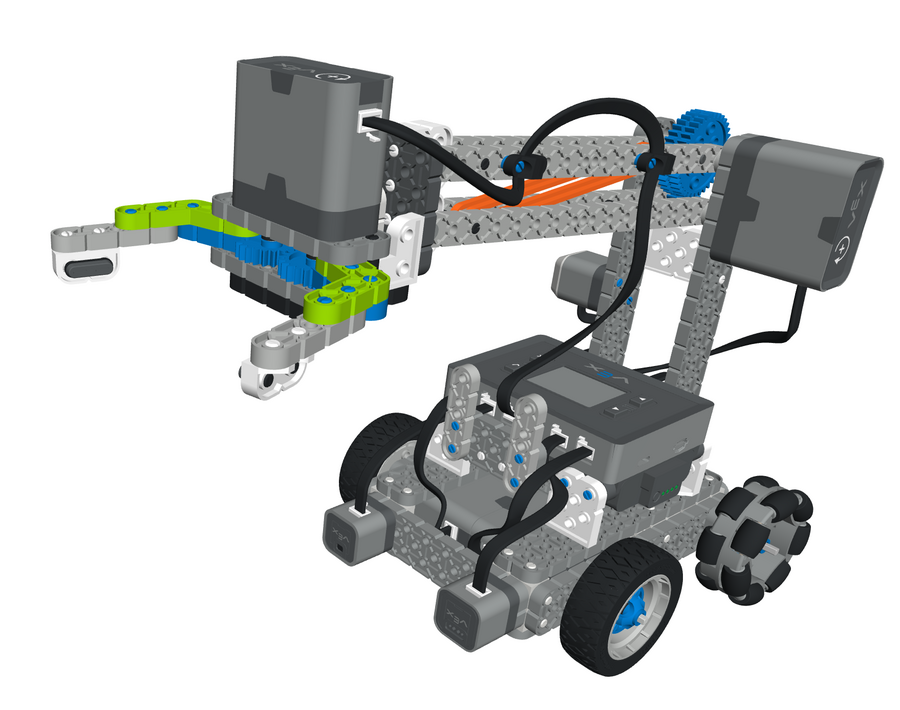
Build a BaseBot, explore wheels, motors, drivetrains and gear ratios, then add a simple claw or lift. Learn to drive it and explain the mechanism.
Term B · Code & Sense
Use VEXcode Blocks, sequences, loops, distance and optical sensors to make a robot respond and complete an introductory autonomous challenge.
These foundations support progression into Pre-Squad, where students apply their skills to real VEX IQ game challenges.
Typically ages 8–1502 · Competition preparation
Pre-Squad
Robot challenges · Mock matches
2 hours per week10 lessons per term · Two age-group formats
Group A · Suggested ages 8–11 2 terms
Group B · Suggested ages 11–15 1 term
Apply mechanical design, coding and teamwork to real VEX IQ games, with increasing independence.
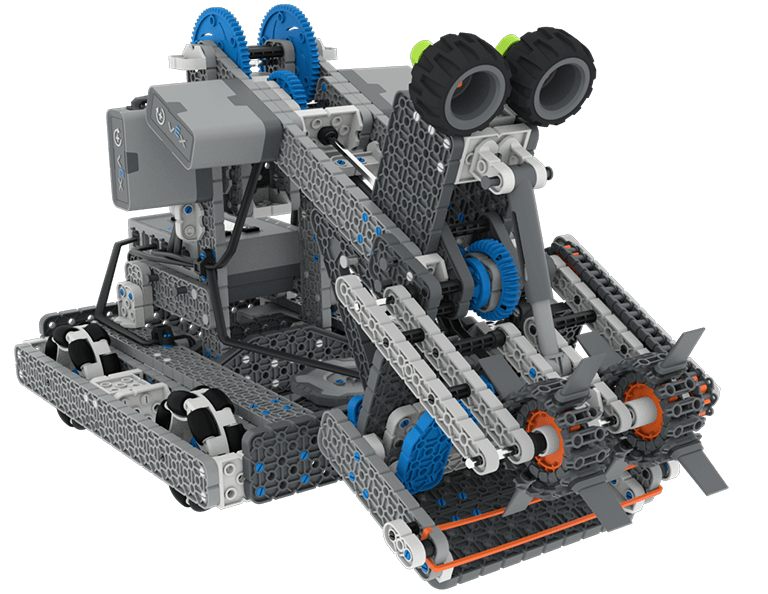
What your child will achieveBuild and improve a game robot, develop driver and autonomous routines, and test it in a mock match ahead of Squad assessment.
See moreSee less about Pre-Squad
One preparation programme, two learning paces
Group A · Suggested ages 8–11 · 2 terms
Term A covers game rules, mechanism testing, driver control and basic autonomous routines. Term B develops design refinement, reliability, multi-step autonomy, teamwork and mock matches.
Group B · Suggested ages 11–15 · 1 term
An accelerated game challenge integrates analysis, building, coding, testing and iteration, ending in a mock match. Students take greater responsibility for design, debugging and team roles.
Both formats develop the same core skills. Age groups are suggested. Squad entry is decided through an end-of-term assessment of readiness, progress and team fit. Younger students who progress quickly may be selected for Competition Squad earlier.
Squad assessment · More than technical skills
Squad entry is decided through an end-of-term assessment, drawing on classroom observation, a practical challenge and a team trial. We consider engineering and coding, problem solving, teamwork and commitment. Age groups are suggested; younger students who progress quickly may be selected earlier. Placement also depends on team fit and available places. Experienced students can be assessed for an appropriate stage.
Usually ages 8–15 · Assessed entryCompetition Engineer
VEX IQ Competition Squad
Design · Test · Iterate · Compete
2 hours per weekFull season · Around 30 core sessions, plus events and team practice
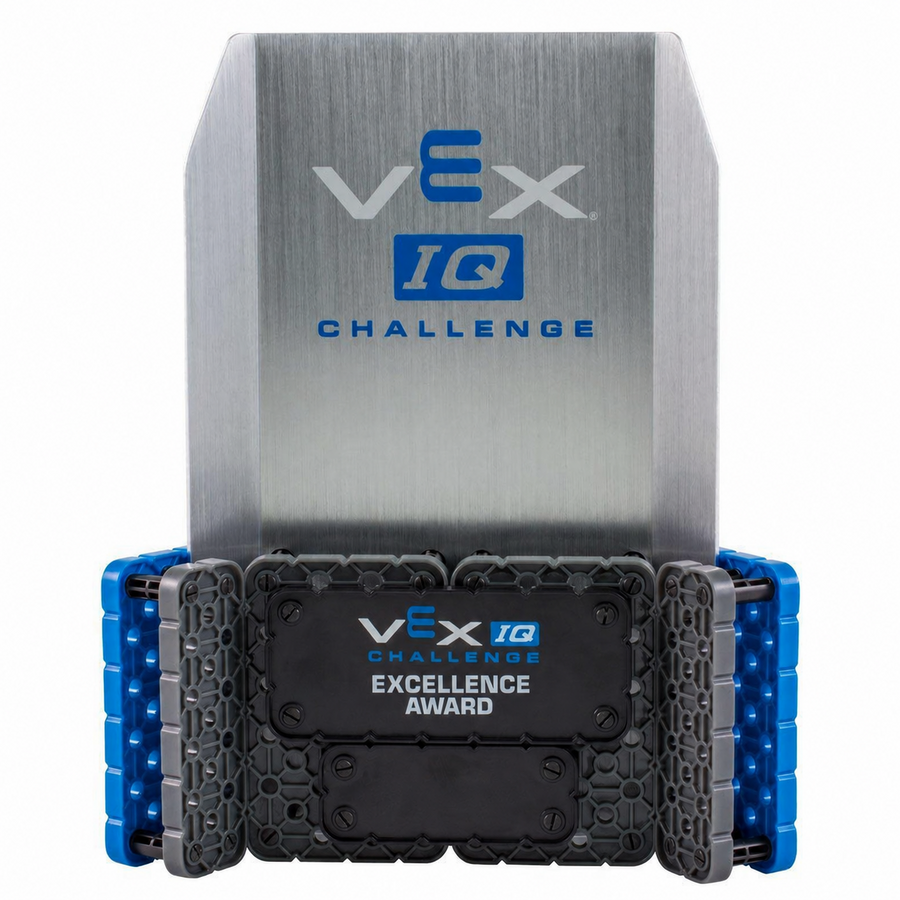
Design a robot for the season’s game. Develop driver and autonomous routines, compete at official events and use results to make the next version better.
Students own the design, code and testing. Families commit to regular attendance, event dates and additional practice when needed.
See moreSee less about VEX IQ Competition Squad
A full season of engineering
Design & Build
Form the team, analyse the game and test prototypes to create a first competition-ready robot.
Control & Test
Develop driver skills, sensors and autonomous control. Test Robot V2, document decisions in the engineering notebook and build a repeatable scoring baseline.
Iterate & Compete
Review competitions to develop Robot V3. Improve reliability, balance speed with accuracy, and refine teamwork, strategy and judging communication.
Joining a team
Entry combines an assessment, a team trial and team matching. Families commit to season attendance, additional practice and competition travel. We aim for championship-level performance; qualification depends on results and the season’s criteria.
What is VEX IQ?
An international robotics competition where teams design, build and code robots for teamwork matches and driver-controlled and autonomous Skills challenges, progressing through regional, national and world events.
04 · Advanced
Larger platforms. Deeper engineering.
Take responsibility for complex mechanisms, software, control and manufacturing through real competition projects.
Typically ages 13–18Systems Engineer
Advanced Squad
VEX V5 / FTC
Full-season competition projects
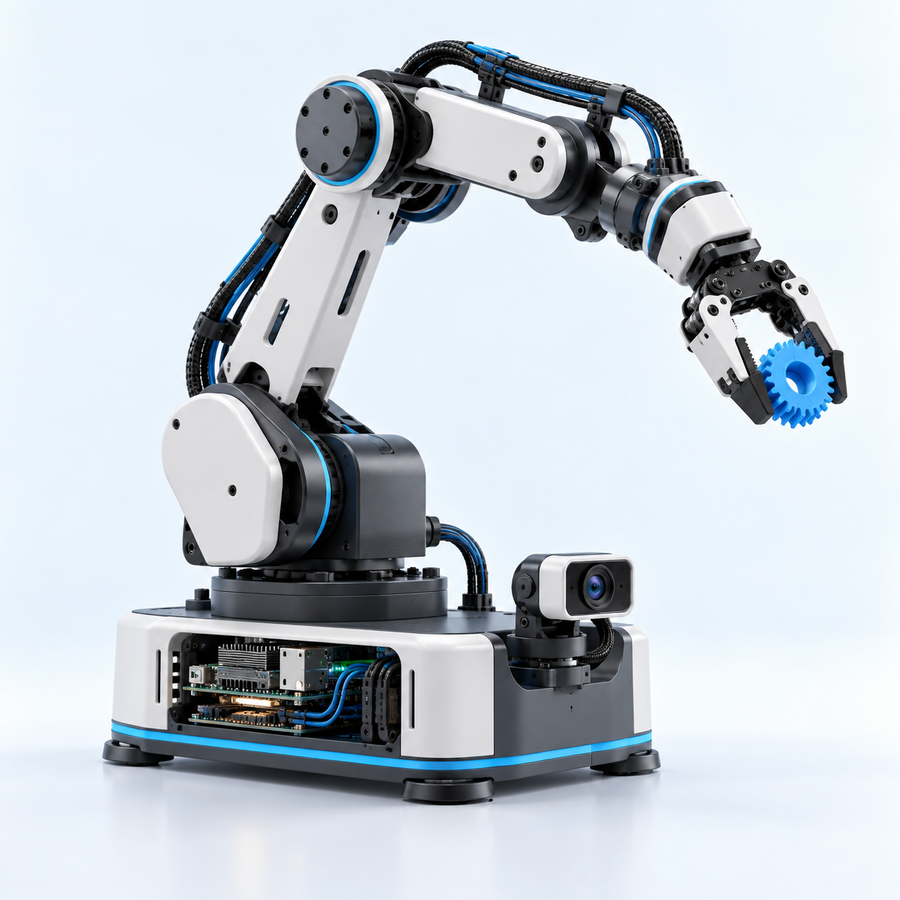
Develop a competition robot through design, manufacturing, coding and testing. Own a subsystem and learn to make it work reliably as part of the whole robot.
VEX V5Mechanisms & robot performanceMetal structures, complex drivetrains, match strategy and sensor-based autonomous control. Test the trade-offs between strength, torque, speed and stability.
About VEX V5 ↗ FTCDesign & systems integrationCAD, 3D printing, fabrication, custom mechanisms, wiring, electronics and closed-loop control. Integrate mechanical, electrical and software systems.
About FIRST Tech Challenge ↗ Future / Elite VEX AI Competition and FRC, subject to team readiness, resources and event access.
See moreSee less about Advanced Squad
Engineering with real responsibility
Students own a subsystem from concept through building, debugging and integration. They practise project planning, SMART goals, technical review and documentation. Families can see prototypes, improved robot versions, autonomous routines and an engineering portfolio.
Choosing the right team
Choose VEX V5 or FTC around technical interests, readiness and available teams. Entry considers prior robot design and coding, independent engineering problem solving, teamwork and season commitment.
Future / Elite directions
VEX AI Competition explores fully autonomous robots, datasets, model training, edge inference and robot coordination, subject to current rules, event access and team capability. FRC adds large-scale systems engineering when team size, skills, facilities, budget and long-term commitment allow.